
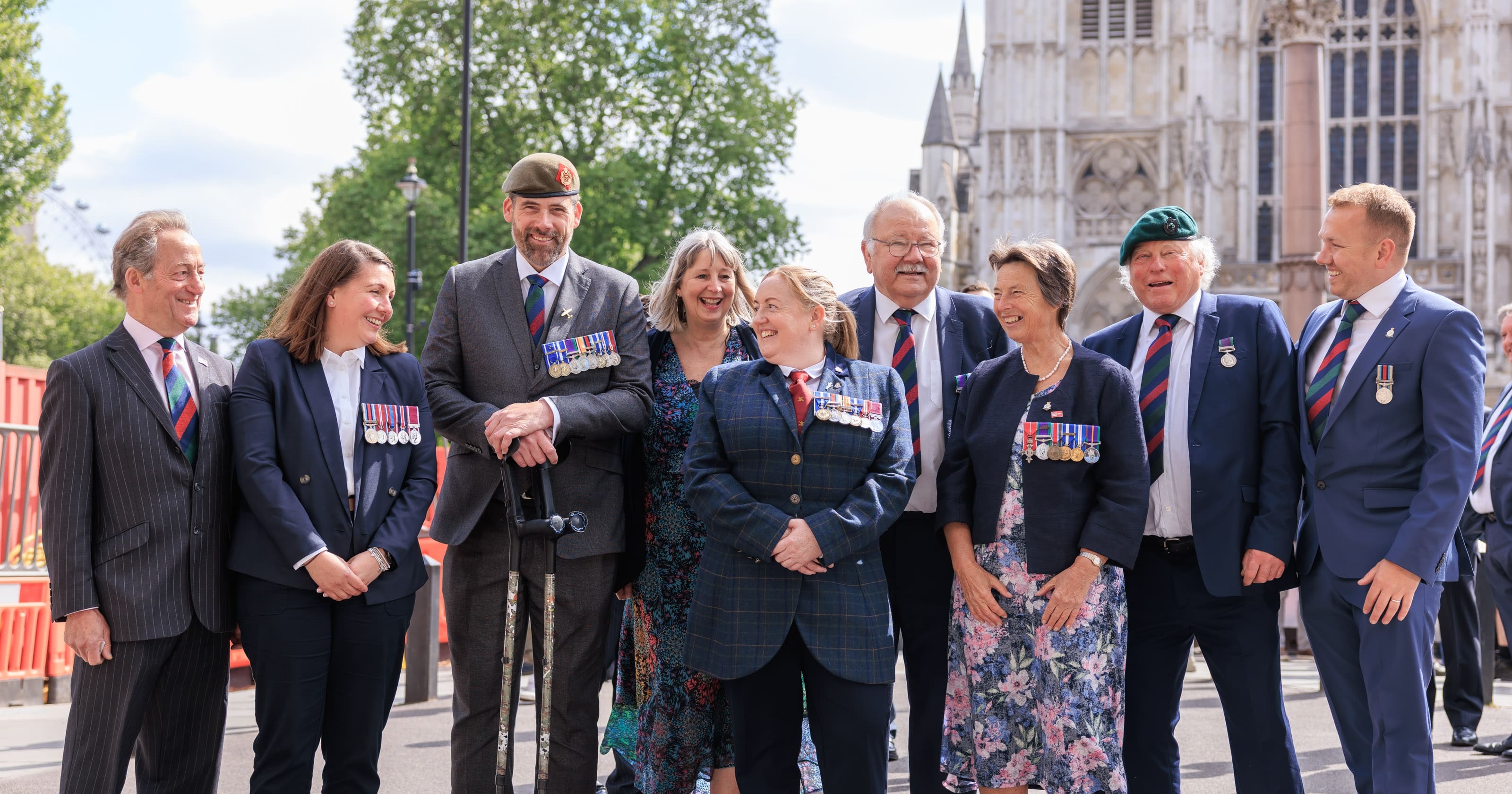
“I knew nothing of my father’s wartime accolades until after his death. It’s because of him that I now support the Army Benevolent Fund.”
Although Roy Collis knew that his father had fought in the Second World War, it wasn’t until after he died that he realised what an incredible impact he’d made.
“I took care of my father’s affairs and out of courtesy I let the Sherwood Rangers Association know he had died,” Roy explained. “They told me that he was awarded the US Silver Star medal for supporting the American infantry in 1944, which was news to me! So, I started doing some more research.”
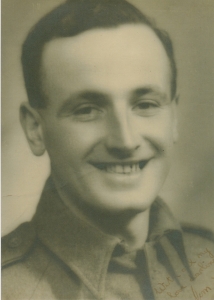
“My father only talked about the war if he was with other people who had served. I had no idea that he’d been awarded honours, nor that he had been mentioned by name in several books.”
Roy has generously pledged his support to the Army Benevolent Fund (ABF) after learning more about his father’s time as a soldier. “I think people who put their lives on the line for their country deserve better than they get,” he said. “Looking into military history more closely has made me realise that often, soldiers and their families don’t get the help they so deserve. That’s why I support the ABF.”
Roy was born just three weeks before D-Day, in a little village near Warminster in Wiltshire.
“My father was away at war, so my mother was living with her parents,” said Roy. “When he returned, my father re-joined the police and essentially looked after the village of Netheravon. He was a big chap: six feet four and built like the proverbial brick house, which certainly helped him maintain order!”
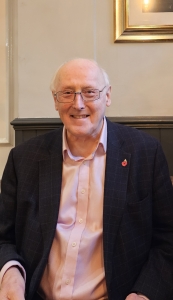
“We eventually moved to Devizes, where I went to the local grammar school. Because of my age, I missed National Service by around two years, so after I left school I went straight into working for library authorities. I worked my way up and came to Buckinghamshire in 1983 as the County Librarian.”
“In 2001 I was appointed a Deputy Lieutenant of Buckinghamshire, chosen to support the Lord-Lieutenant and promote the wellbeing of the county. Sadly, my father died mere weeks before I achieved this.”
Roy’s research found that his father had earned his US Silver Star for gallantry in the Battle of Geilenkirchen, as a Sergeant in the Sherwood Rangers Yeomanry. “It’s an honour seldom awarded to an non-commissioned officer,” Roy explained. “My father volunteered for the Army in 1941.”
“A casualty book for his regiment had been kept from 1944, and on the 6th June – D-Day – the first name in that book was my father’s. He was wounded, but he went straight back to fight the rest of the war.”
Through his investigations, Roy also discovered a citation for a Distinguished Conduct Medal (DCM). “Unfortunately, you can’t have two military awards for the same incident, so the US Silver Star was originally recorded as my father’s honour,” he explained. “Though in some books, he is recorded as having received the DCM instead.”
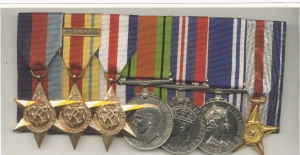
Roy chose to donate his father’s medals – which also include a police medal – to the Sherwood Rangers Yeomanry Museum in Nottingham, with his mother’s consent.
Following his retirement, Roy spent 10 years working and fundraising for the Royal Star and Garter Home for disabled ex-servicemen and women. “I had the privilege of working with quite a few Normandy and Burma Star veterans,” he said. “I’ve never been called upon to defend my country and the very idea of it terrifies me. But these veterans talked openly about their training and just doing whatever the job required of them, which I thought was amazing.”
“I also did a hugely successful fundraising event in Buckinghamshire with Simon Weston, the Falklands War veteran, which included a radio interview with him at my house. He is a very brave and interesting man, so that was an enormous honour.”
Roy is now a dedicated supporter of many charities, which along with the ABF include the National Multiple Sclerosis Society and Diabetes UK, in memory of his late wife.
“I’d like to think people would say that my heart was always in the right place,” he said. “I’m not a wealthy man, but I’m keen in my modest way to support causes that are dear to me.”
“Not many people know that there is only one year in the 20th century when no soldier was killed on active service, and that is 1968. That fact, for me, underlines the importance of supporting our soldiers as much as we can.”